Steam generators for industrial process and energy applications
Powerful, safe, and efficient
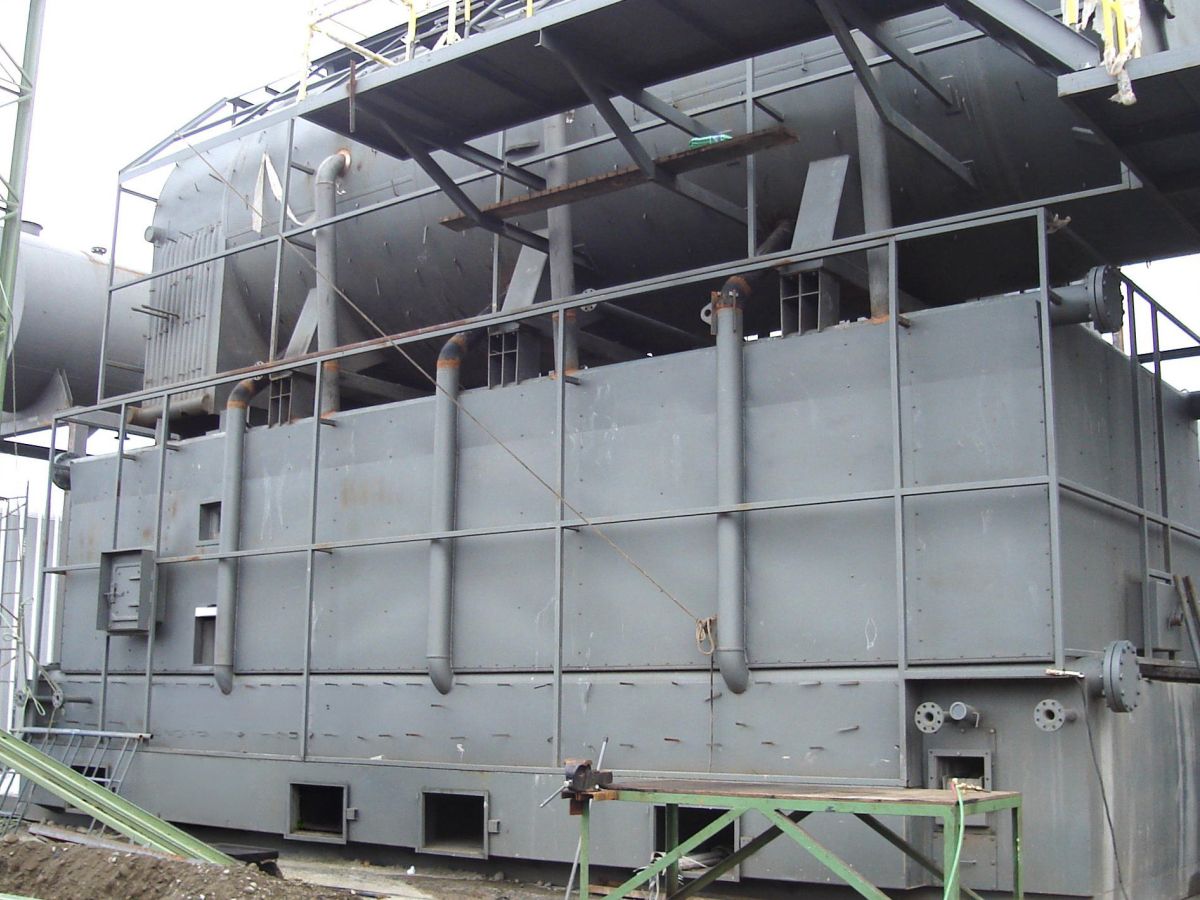
Steam boiler systems and indirect steam generators have always been the central components of many industrial energy and process heating systems. They typically generate saturated steam as an energy source for heating, powering, drying, or for chemical and process engineering as well as thermal processes. CAW develops and manufactures robust steam generator systems for continuous industrial operation – designed for high availability, safe operation, and efficient energy conversion.
Our steam generators are individually adapted to the respective process requirements and can be flexibly integrated into existing systems or used as part of new energy and heating concepts.
How does a steam generator work?
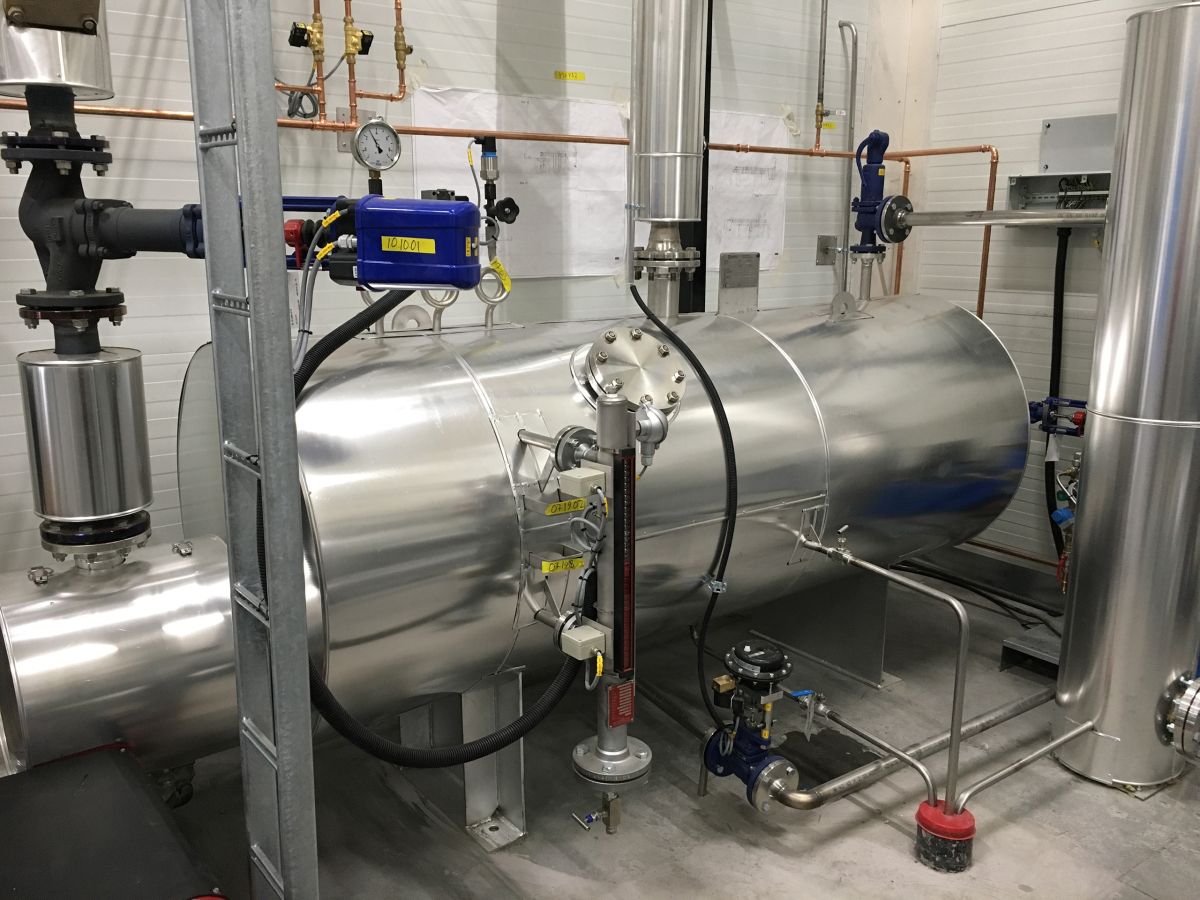
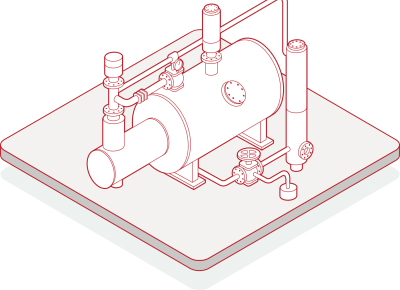
A steam generator – essentially a large water basin with a hairpin-shaped thermal oil tube bundle installed at the bottom – produces dry saturated steam by heating and evaporating feed water that has been treated, i.e., at a minimum filtered and, typically softened and subsequently thermally degassed while using thermal oil as a heat source. The steam produced in this process is then available as an energy source for various industrial applications. These units operate fully automatically at pressures up to approx. 60 bar and can be operated without a traditional, permanently on-site boiler operator.
Design and process steps
- Heat source: The required heat is provided by indirect heating using thermal oil.
- Heating surfaces: The heat is transferred via immersed heating surfaces to the preheated feed water until the desired steam pressure, and thus, the required steam temperature is reached.
- Steam chamber / dome: The generated steam accumulates above the boiling feed water level and is discharged from the steam generator housing in a controlled manner.
- Feedwater system: Raw water is filtered, softened, treated using thermal trickle degassers / deaerators, preheated in a designated storage tank and, continuously fed to the steam generator by feed pumps.
- Control and safety devices: Monitoring of pressure/temperature, water level and control/regulating valve.
Technical features of CAW steam generators
- Designed for a range of pressure and capacity levels.
- Fully automatic operation and high operational reliability thanks to redundant monitoring systems.
- Optimized heating surfaces for high efficiency.
- Integration into existing energy and process heating systems.
- Manufactured and designed in accordance with applicable guidelines and regulations.
Where are steam generators used?
Steam generators are used in a wide range of industrial facilities where steam is required as an energy source, a power source, or a process medium. CAW designs and builds both standalone steam systems and systems integrated with other heat generators.
Typical system types and operating environments
Steam generators indirectly heated with thermal oil
Generation of dry saturated and superheated steam using thermal oil.
Power plants
Use of steam for combined heat and power or electricity generation.
Combined heating systems
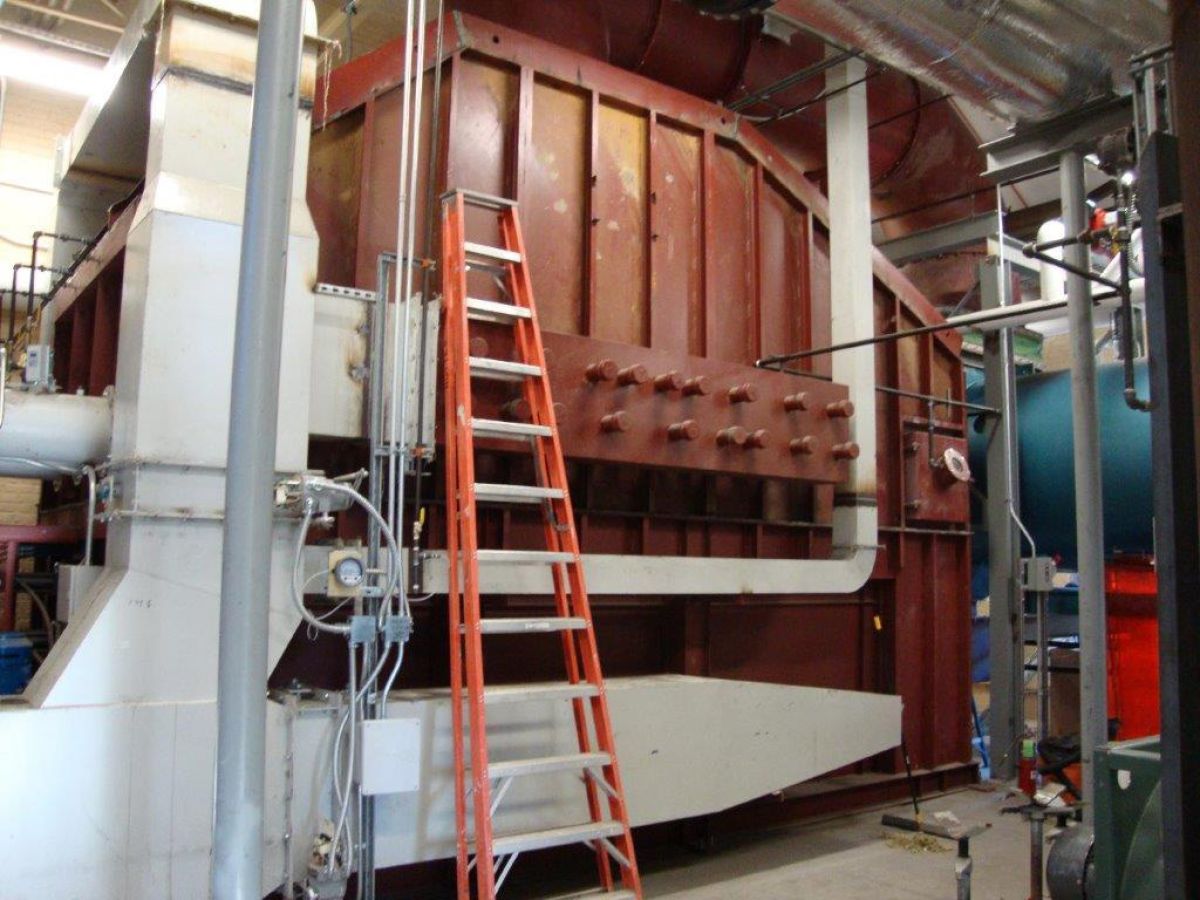
Integration into combustion, thermal oil or waste heat recovery systems.
Use as part of complex plant concepts
-
In conjunction with thermal oil heaters for indirect steam generation.
-
As waste heat steam generators, and thus as conventional steam boilers, as well as downstream systems in incineration plants or thermal oxidizers.
-
In combination with ORC systems for increased efficiency.
-
As a central steam source for multiple production areas.
Industries in which steam generators are used
Steam generators are indispensable in many industries, as steam is a virtually universal energy source. CAW systems are used across a wide range of industries.
Typical industries

Chemical and petrochemical industry

Personal care products industry

Food and beverage industry

Paper and pulp industry

Plastics and rubber industry

Textile industry

Building materials and cement industry

Energy and power generation industry

General mechanical and process engineering plant engineering
Environmental and other chemical and biological process engineering
Typical applications
-
Heating of production facilities and processes
-
Powering turbines and machinery
-
Drying and sterilisation processes
-
Cleaning and treatment processes
-
Industrial energy supply and combined heat and power generation